|
| HOME | PROTECTION | NATURE | PLAN YOUR VISIT | FAQ | JOIN/DONATE | ABOUT |
| Mammals in Douglas-Fir National Monument |
| There are many mammals within the proposed National Monument, and several others which may be in the proposed Monument. None of them are easy to see. Some of them are pictured below. |
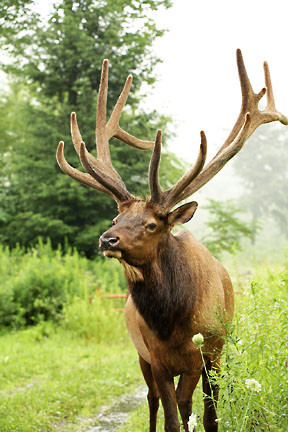
Photo: IndigoBunting/Pixabay |
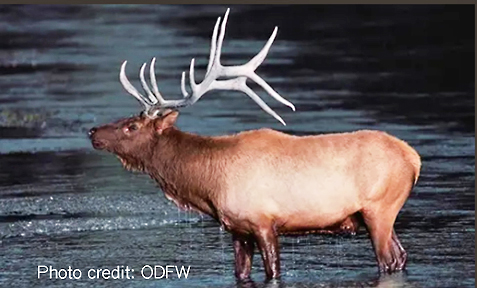
Photo: Oregon Department of Fish and Wildlife |
| The Roosevelt Elk is the largest animal that might be seen within the Doug. It also may be the only animal that might be regularly scheduled for viewing within the Doug. Elk are sometimes to be seen early in the morning in winter at the meadow along the Walton Ranch Trail. The Roosevelt elk may grow to up to 10 feet in length and stand up to five and a half feet tall. Roosevelt elk bulls may weigh between 700 and 1,100 pounds. Female elk weigh between 575 and 625 pounds. |
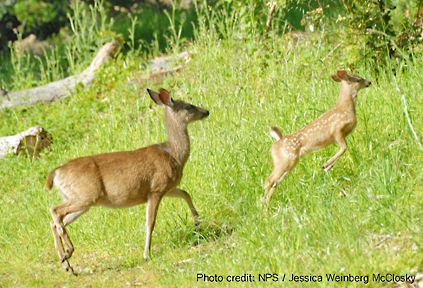
Photo: Jessica Weinberg Mcclosky, |
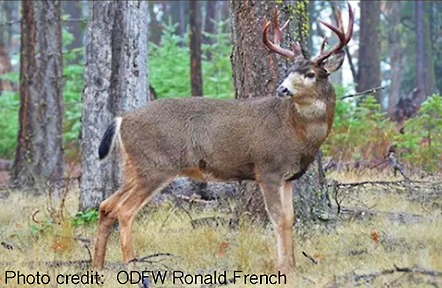
Photo: Ronald French, |
| There are three species of deer in Oregon, but probably only one
species is regularly seen in the Doug: the Columbian Black-tailed
Deer. Mule deer are only regularly reported east of the Cascade
Range summit, so they are not included here. Interestingly, Mule
Deer may actually be the same species as the Black-tailed deer. ODFW
says: the black-tailed deer is smaller and darker, and frequents
dense, early seral forest communities. The most distinguishing
feature of the black-tailed deer is the tail, which is not as long or wide as that of the white-tail, but much larger
than that of the mule deer. ODFW continues: "Because of the differences in size, color, marking, ecology, and behavior, and because of the voluminous information available for the two races, we decided to treat them separately. Nevertheless, we emphasize that despite these differences, the races readily integrate and produce offspring." The other Oregon species is the White-tailed Deer, which is definitely not in the Doug. |
Photo: TheOtherKiev/Pixabay |
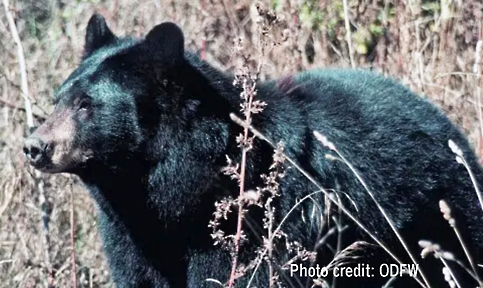
Photo: Oregon Department of Fish and Wildlife |
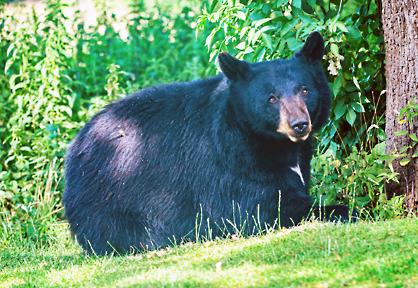
| The Black Bear is the largest predator in the Doug. It is important to remember that Black Bears are omnivors and will eat any kind of meat they can get a hold of. Visitors to the woods should always exercise care if they encounter a bear, but DO NOT RUN from a bear. Back away carefully. |
Photo: Pixabay |
Photo: no-longer-here/Pixabay |
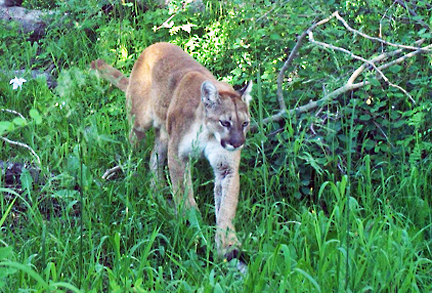
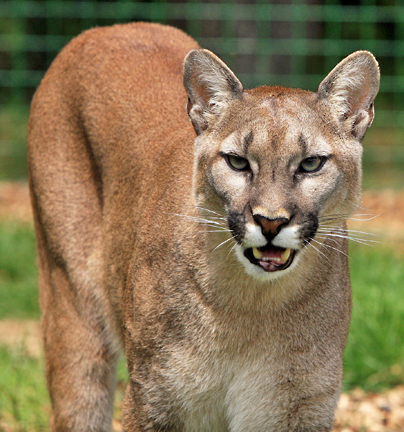
| The Mountain Lion, or Cougar, is the other large predator of the Doug. Mountain Lions may be more common in the Doug than bears, but they may be less likely to be seen. As with bears, if you see a Cougar, don't run from them, but make yourself as large as possible, and back away slowly. |
Photo: K. Bacher, |
Photo: US Fish and Wildlife Service |
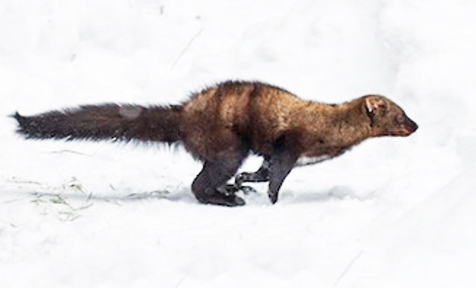
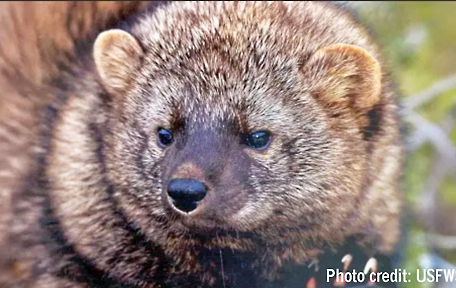
| The Fisher is the largest of what you might call the weasel type
animals, although it is much bulkier and less elongated. Males are
up to 47 inches in total length and weigh up to 13 lbs. Females are
smaller, up to 37 inches long and weigh up to 6 pounds. Fishers were once native to the Cascades, and are making a comeback, including occasionally in the area of the Doug. They are a state and federal endangered species and are found in old-growth forests. The actual or potential presence of Fishers is an important factor in the evaluation of activities and projects in the Forest. |
Photo: Eric Johnston/Pixabay |
Photo: origin not certain |
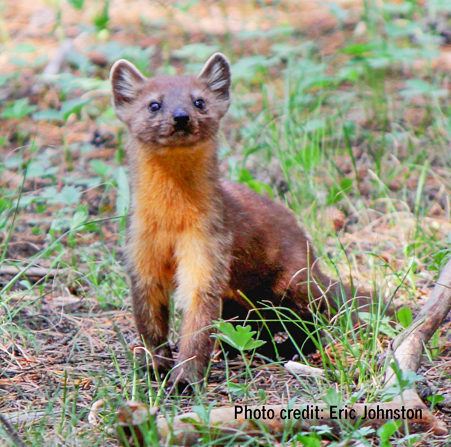
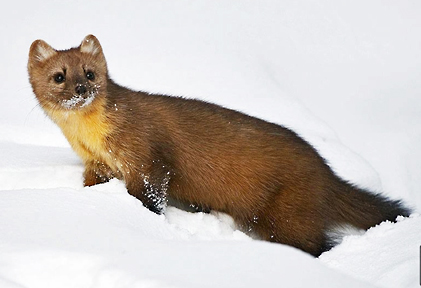
| The next largest weasel family member is the Marten or Pine Marten. Martin are smaller than the Fisher, but larger than the long-tailed weasel or the short-tailed weasel (aka ermine). Pine Martens are, as the name suggests, arboreal hunters, including in Douglas-fir forests. |
Photo: Andrea Bohl/Pixabay |
Photo: Antranias/Pixabay |
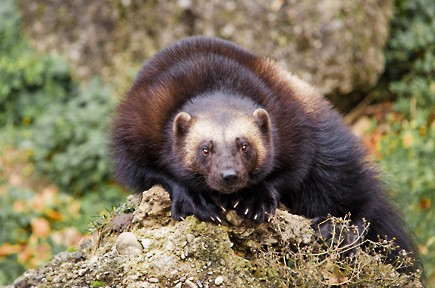
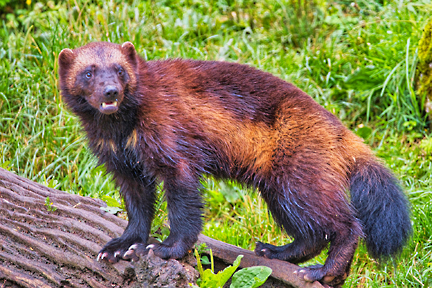
| The Wolverine is the largest mustelid. It is rare everywhere, so your chances of seeing one is small at best. It is included here over less rare mammals because of its connection to the Doug. One of the few places in western Oregon that ODFW reports the Wolverine having been seen is on Three Fingered Jack. |
Photo: National Park Service |
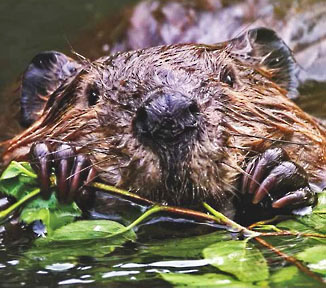
North American Beaver |
Photo: Northwest Wildlife Online |
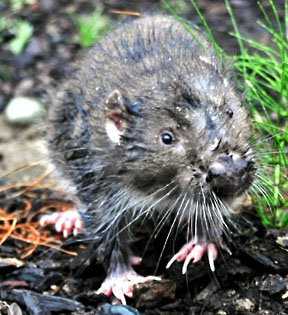
Mountain Beaver |
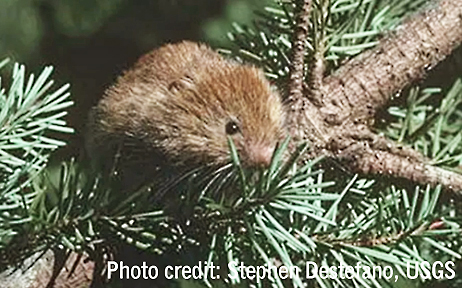
Photo: Stephen Destefano, |
Probably the most
consequential rodent in the Doug is the Red Tree Vole. It is
consequential because, within its range, it is a major food of the
Northern Spotted Owl. It is also a prey species for Fishers, Martens
and weasels. The Red Tree Vole is a "medium sized" vole (6 to 8 inches long, including the tail), which is a dark brown when immature, but increases its reddish color as it matures. Red tree voles are largely arboreal and build their nests (primarily the outside edges of Douglas-fir needles) on suitable foundations (nests of birds or other arboreal mammals, or suitable parts of the live crowns of trees) in Douglas-fir, western hemlock, grand fir, and Sitka spruce, species that serve as a source of food. The Douglas-fir needles are its major source of food. |
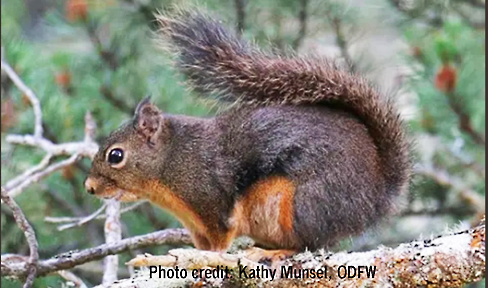
Photo: Kathy Munsel, |
This is the Douglas
Squirrel, like the Douglas-fir, it is named for David Douglas.
It is larger than the Red Tree Vole (13 inches instead of 8 inches)
and dines on conifer seeds instead of needles. The Douglas Squirrel is also preyed upon by Spotted Owls, Fishers and every other predator within the Doug. |
| Other mammals that might be found in the Doug, but not featured here, include, but are not limited to, three species of foxes (Red, Gray Fox and Sierra-Nevada Red Fox), coyotes, bobcats, racoons, two species of skunk, several species of rabbits, several other species of squirrels, perhaps ten species of bats, including the silver haired bat and the long-eared myotis, who primarily frequent coniferous forests, and porcupines. |
| Return to Nature |